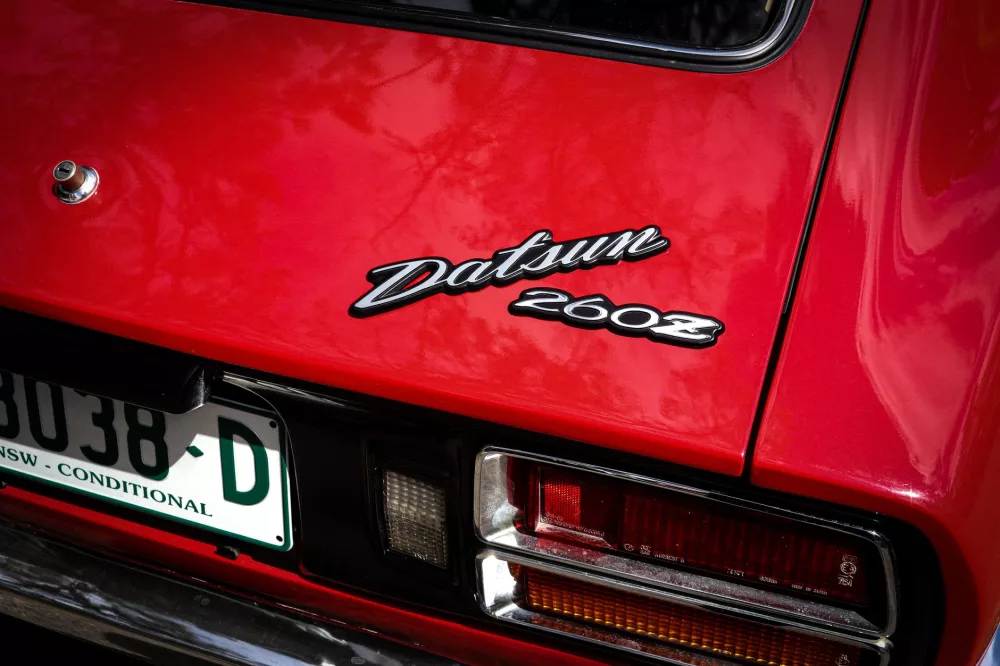
Datsun. Just hearing that name, it sends a little shiver down my spine, you know? It's more than just a car brand; it's an entire chapter in automotive history, a story of innovation, resilience, and a brand's journey across continents. For many of us, particularly those who grew up in the latter half of the 20th century, Datsun wasn't just a car; it was the car for countless families, a symbol of reliability and accessibility. My personal connection began quite early; I remember seeing my uncle's Datsun pickup, a workhorse that never seemed to quit. It left an impression, for sure.
The Genesis: DAT, Datsun, and a Vision
So, where did this legendary name come from? It's a fascinating origin story that dates back much further than most people realize. The company actually began as Kaishinsha Motor Car Works in 1911. By 1914, they produced their first car, naming it 'DAT' after the family names of the company's three main investors: Kenjiro Den, Rokuro Aoyama, and Meitaro Takeuchi. Pretty neat, right?
Things took a bit of a turn in the 1930s. The company, now under new management and renamed Jitsuyo Jidosha Co., Ltd., started producing small cars designed for the masses. They called these new, smaller vehicles 'Son of DAT'. But 'son' in Japanese is 'son', which, phonetically, can sound a lot like 'loss'. Nobody wants a 'loss car'! So, they smartly changed it to 'SUN', giving us 'DATSUN' – 'Sun of DAT'. This wasn't just a clever renaming; it represented a strategic shift towards more affordable, compact vehicles that would eventually become the backbone of the brand's international success.
Post-War Growth and Export Ambitions
After World War II, Japan's automotive industry was rebuilding, and Datsun, now firmly under the umbrella of Nissan Motor Co., Ltd. (which acquired DAT in 1934), was at the forefront. They realized pretty quickly that domestic markets alone wouldn't sustain their growth. The world beckoned, particularly the booming post-war American market. I bet they couldn't have imagined the scale of what they were about to achieve.
In the late 1950s, Datsun made its first significant foray into the United States. It wasn't an instant smash hit, not by a long shot. Early models were often seen as quirky, perhaps a bit underpowered compared to the domestic giants. But what they lacked in immediate punch, they more than made up for in other areas. They were incredibly well-built, incredibly economical, and, crucially, very affordable. American consumers, looking for reliable and inexpensive transportation, slowly but surely began to take notice. It was a slow burn, but boy, did it ignite.
The Models That Defined a Brand
When you talk about Datsun, certain models just pop into your head. These weren't just cars; they were cultural phenomena.
- The Datsun Fairlady / Datsun Sports (1959-1970): Before the Z-cars, there was the Fairlady. These open-top sports roadsters were Datsun's initial attempt to capture a slice of the sports car market. They had charm, they had character, and they were a fantastic precursor to what was to come. For many, including me, they represent that classic, unpretentious sports car vibe.
- The Datsun 510 (1968-1973): Ah, the 510. This car holds a special place in my heart, and for good reason. It was often dubbed the 'poor man's BMW,' and it lived up to that nickname. With its independent rear suspension, overhead cam engine, and sleek European-inspired styling, the 510 offered incredible driving dynamics at an unbeatable price. It absolutely dominated in racing, particularly in Trans-Am, solidifying Datsun's reputation for performance and engineering prowess. It completely changed perceptions.
- The Z-Cars (240Z, 260Z, 280Z) (1969-1978): This is it. The big one. The Datsun 240Z, introduced in 1969, wasn't just a car; it was a game-changer. It combined stunning looks, genuine sports car performance, and astonishing reliability with an accessible price tag. It redefined what a sports car could be. It wasn't just competing with European giants; it was often outperforming them, all while being significantly more dependable and easier on the wallet. I've always admired how they managed to pull that off. Subsequent models like the 260Z and 280Z continued this legacy, keeping the Z-car at the top of many enthusiasts' wish lists.
- Datsun Pickups: Let's not forget the workhorses. Datsun built an incredible reputation for its reliable, robust pickup trucks. From farming communities to construction sites, these trucks were everywhere. They were simple, tough, and just kept going. It's the kind of vehicle that built loyalty, one rugged mile at a time.
The Rebranding: Datsun Becomes Nissan
Despite Datsun's immense success, particularly in export markets, Nissan made a strategic decision in the early 1980s: to consolidate all its global products under the Nissan brand name. This was a massive undertaking, and it wasn't without controversy or cost. Many consumers had a strong emotional connection to the Datsun name. 'Datsun Saves!' was a popular slogan, and transitioning away from that established identity was a bold move.
I remember the transition; it was gradual, with 'Datsun by Nissan' badging appearing for a while before the Datsun name faded entirely. The company wanted to create a unified global brand identity, believing that a single, powerful name would serve them better in the long run. And while it was a bit sad to see Datsun go, the Nissan brand certainly grew into its own, building upon the foundations laid by its predecessor.
A Surprising Return: Datsun's Modern Rebirth
Then, after decades of being a cherished memory, something unexpected happened. In 2013, Nissan announced they were bringing Datsun back! This wasn't a revival of the classic sports cars, though. This new Datsun was positioned as an entry-level brand for emerging markets, focusing on affordability and practicality in countries like India, Russia, Indonesia, and South Africa. It was a completely different strategy, targeting first-time car buyers with modern, budget-friendly vehicles.
It's interesting to see how a name can evolve and adapt over time. The modern Datsun cars, while vastly different from the iconic 510s and Z-cars, still carry a piece of that original Datsun spirit: providing accessible, reliable transportation to a wide audience. It wasn't a perfect relaunch everywhere, and the brand's second life was relatively short-lived in some regions, but it certainly proves the enduring power of the Datsun name.
The Enduring Legacy
So, what does Datsun mean today? For me, and for countless enthusiasts worldwide, it signifies an era of automotive ingenuity. It represents the moment Japanese cars proved they could compete, and often surpass, the established automotive powers. It's a legacy of innovation, performance, and incredible value. When I see a well-preserved 240Z or a trusty old Datsun pickup, it's not just an old car; it's a piece of history that tells a story of ambition, hard work, and ultimately, success. It truly set the stage for Japanese automakers to become the global forces they are today, and we shouldn't ever forget that impact. It certainly earned its place in the automotive hall of fame, that's for sure.